Here are the best free Autotune VST plugins for Windows and Mac. We have included video demos, feature lists, pros, cons, and plugin ratings.
How we rate Autotune plugins: We rate each plugin based on sound quality, design, performance, features, usability, and compatibility. We rate plugins on a scale of 1 to 100.
Table of Contents

I have spent over 15 years testing and comparing hundreds of free and paid VST plugins, supported by hands-on demos on our YouTube channel, which has 12,000+ subscribers.
Best Free Autotune VST Plugins
This table compares autotune plugins by operating system, bit version, format, and rating.
| # | Plugins | Ratings | OS | Formats |
|---|---|---|---|---|
| 1 | Graillon 2 | Windows Mac Linux | VST, AU, AAX, LV2 | |
| 2 | Multiply 2 | Windows Mac | VST3, AU, AAX | |
| 3 | Old Skool Verb | Windows Mac | VST, VST3, AAX | |
| 4 | Melda MAutoPitch | Windows Mac | VST, AU | |
| 5 | Vocal King | Windows Mac | VST, AU | |
| 6 | Autotune Evo | Windows Mac | VST, AU, RTAS | |
| 7 | VstSpeek | Windows | VST | |
| 8 | GVST GSnap | Windows Mac Linux | VST, AU | |
| 9 | DSP-2 | Windows | VST | |
| 10 | KeroVee | Windows | VST | |
| 11 | EasyVox | Windows | VST | |
| 12 | VocEQPro | Windows | VST | |
| 13 | Autotalent | Windows Mac | VST, AU | |
| 14 | Side Brain's Autotuna | Windows Mac | VST | |
| 15 | Son of a Pitch | Windows | VST |
1. Graillon 2
OS: Windows Win Mac Mac Linux Linux Bit Version: 64-bit Developer: Auburn Sounds Size: 57 MB Rating: 90/100
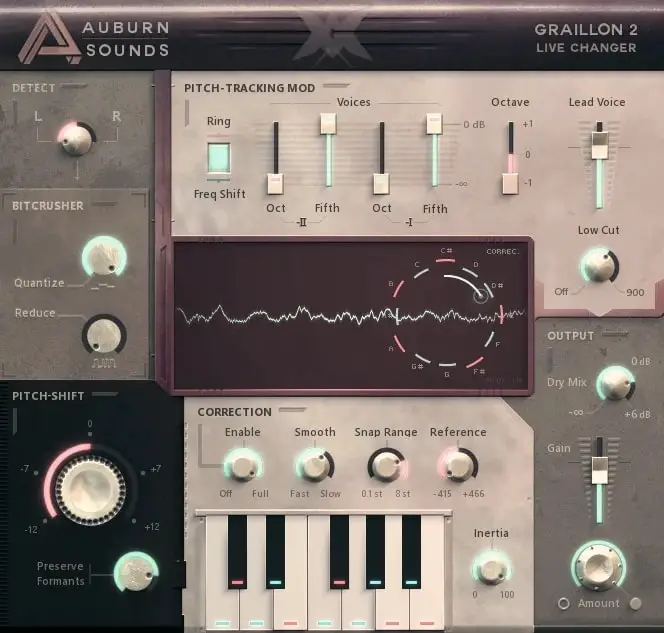
Graillon 2 offers real-time vocal tuning and creative tone shaping for producers and singers. It combines pitch correction, formant shifting, and pitch-shifting to achieve both natural and robotic sounds. Its built-in compressor, gate, chorus, preamp, and bitcrusher give more polish and control.
It includes three pitch engines, letting users choose between classic and updated tones. Optional tools like Pitch-Tracking Modulation, keyboard tuning, and a doubler expand vocal styles. Graillon 2 works across major systems and plugin formats, making it reliable for studio or live use.
Features
- Real-Time Pitch Correction
- Natural Or Hard-Tune Modes
- Formant Shifting For Vocal Tone
- Built-In Compressor And Gate
- Chorus, Preamp, And Bitcrusher Effects
- Keyboard Tuning For Custom Scales
- Vocal Doubler For Added Presence
- Visual Waveform Pitch Display
- Low Latency For Live Use
- Low CPU Usage Operation
Pros
- Natural-sounding pitch correction results
- Low CPU use for smooth playback
- Three different pitch engines included
- Includes built-in compressor and gate
- Bitcrusher adds cool vocal texture
- Keyboard tuning for custom scales
- Vocal doubler adds fullness
- Formant control keeps tone realistic
- Visual pitch display helps learning
- Works on Windows, Mac, and Linux
Cons
- Full version costs extra money
- No built-in reverb or delay
- Can misread low male voices
- GUI sometimes freezes in DAWs
- Major updates break old projects
- Pitch correction can sound harsh
- Formant shift can sound robotic
- No scale detection like GSnap
- Less precise on quick vocals
- No MIDI learn for quick mapping
Testimonials
Audio Demo
Tips
- I like to start by setting the “Pitch Correction” knob slowly so my voice still sounds natural.
- I use the “Dry/Wet” control to blend my real voice with the tuned voice for a smoother sound.
- Finding the right key before tuning makes vocal correction sound more natural.
- Use faster correction speeds for a robotic or pop-style effect, and slower speeds for softer songs.
- Placing Graillon 2 first in the plugin chain helps it track pitch more accurately.
- I often record my vocals clean first, then add Graillon 2 later in the mix to find the best balance.
- Always check how Graillon 2 sounds in the mix with the full track, not just on solo vocals.
2. Multiply 2

OS: Windows Win Mac Mac Bit Version: 64-bit Developer: ACON DIGITAL Size: 10 MB Rating: 87/100
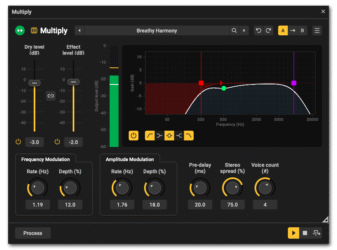
Multiply 2 is a free chorus plug-in that creates thicker, wider sound without harsh comb-filtering. Its phase-randomizing filters make up to six added voices feel natural, from subtle doubling to a room full of performers.
Shape the effect with frequency and volume modulation, stereo spread, pre-delay, and a built-in five-band equalizer. Multiply 2 supports mono and stereo processing in AU, VST, VST3, and AAX formats on Windows and macOS.
Features
- Free Chorus Effect
- Up To Six Extra Voices
- Phase-Randomizing Filters Reduce Comb Filtering
- Frequency Modulation Controls
- Amplitude Modulation Controls
- Adjustable Stereo Spread
- Built-In Five-Band Equalizer
- Adjustable Pre-Delay
- True Stereo Processing
- Supports Rates Up To 96kHz
Pros
- Free full version
- Six extra voices available
- Avoids harsh chorus comb filtering
- Creates natural sounding thickness
- Offers separate pitch movement control
- Adds separate volume movement control
- Shapes tone with five EQ bands
- Shows EQ changes visually
- Adds adjustable pre-delay effects
- Supports true stereo processing
Cons
- Not an automatic pitch correction tool
- No vocal tuning or note fixing
- No formant shifting controls
- No pitch shifting engine
- No key or scale settings
- Less useful for vocal repair
- Designed mainly for chorus effects
Testimonials
Tips
- I start with a factory preset to learn what Multiply 2 can do. Then I change one control at a time so I can hear each change clearly.
- I raise the voice count when I want a bigger, thicker sound. Multiply 2 can add up to six extra voices.
- I keep the stereo spread low for a focused sound. I raise it when I want the track to feel wider.
- I use the built-in EQ to remove low rumble from the effect. This keeps the chorus from making the mix muddy.
- I add a little pre-delay when I want the original sound to stay clear. More pre-delay can create a soft echo-like effect.
- I compare the effect with the bypass button often. If the change makes the track worse, I turn the effect down.
- Use Multiply 2 on vocals to create a soft double or group effect. Keep the dry signal present so the words stay easy to understand.
3. Old Skool Verb

OS: Windows Win Mac Mac Bit Version: 32-bit, 64-bit Developer: Voxengo Size: 21 MB Rating: 83/100
Old Skool Verb is a free stereo reverb plugin by Voxengo for Windows and macOS. It provides room, plate, and hall modes suited to vocals, piano, pads, guitars, and selected drum sounds.
Its controls adjust space, time, pre-delay, stereo width, damping, EQ, and wet-dry balance. The plugin includes presets, A/B comparisons, undo and redo, zero-latency processing, and VST, VST3, AAX, and AudioUnit support.
Features
- Five Selectable Reverb Modes
- Clear Stereo Spatial Image
- Reverb Mode Editing Controls
- Pre-Delay And Space Controls
- Adjustable Reverb Time And Width
- Low And High Frequency Damping
- Built-In Reverb Tone EQ
- Dry And Wet Level Controls
- Zero Processing Latency
- Resizable High-DPI Interface
Pros
- Free professional-quality reverb
- Five useful reverb modes
- Detailed editing for advanced users
- Zero processing latency
- Supports stereo processing
- Supports all sample rates
- Also supports AAX and AudioUnit
- Uses low computer power
- Offers easy A/B comparisons
- Resizable interface with helpful hints
Cons
- No pitch correction tools
- Cannot fix off-key vocals
- No MIDI note control
- No formant shifting controls
- No key or scale tuning
- No manual note editing
- No pitch display or graph
Testimonials
Tips
- Set the correct song key and scale before using an Auto-Tune VST. Wrong key settings can pull notes to the wrong pitches.
- Choose the vocal range or input type that matches the singer. The right range helps the plugin track the notes more accurately.
- Start with a medium Retune Speed for natural vocals. Faster settings create a stronger tuning effect, while slower settings keep more of the singer’s movement.
- Raise Humanize when long notes sound stiff or robotic. This lets sustained notes keep more natural movement.
- Use Flex Tune when the vocal needs correction but should still sound expressive. Higher settings allow more natural pitch movement around the target notes.
- Record clean vocals before adding pitch correction. Avoid clipping, strong room noise, reverb, and delay on the track being tuned.
- Trust the sound more than the tuning meter. A note can look correct on screen but still feel unnatural in the mix.
4. Melda MAutoPitch
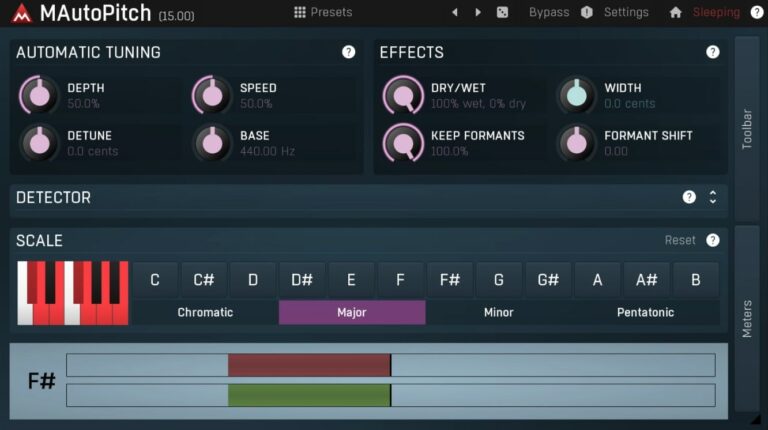
OS: Windows Win Mac Mac Bit Version: 64-bit Developer: MeldaProduction Size: 200 MB Rating: 81/100
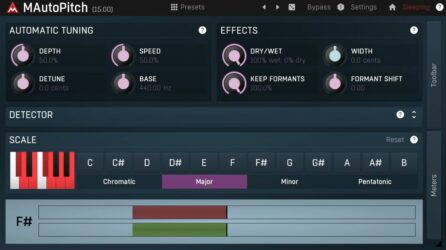
Melda MAutoPitch offers automatic pitch correction for vocals and monophonic instruments, helping you keep notes in tune quickly and accurately. It includes controls for depth, speed, and scale so you can fine-tune how natural or robotic the tuning sounds.
The plugin also adds formant shifting and stereo width options for creative vocal shaping. These tools let you adjust voice character or widen the mix space. Available free in the MFreeFXBundle, MAutoPitch is a simple and effective solution for both clean tuning and stylistic effects.
Features
- Automatic Vocal And Instrument Tuning
- Pitch Correction For Monophonic Sounds
- Formant Shift For Voice Character
- Speed Control For Correction Rate
- Detune Option For Fine Pitch Adjustments
- Scale Selector For Musical Guidance
- Pitch Display With Visual Feedback
- Low Latency Performance
- Light CPU Usage
- Simple And Clear Interface
Pros
- Totally free with no limits
- Fast real-time pitch tuning
- Formant shift for tone control
- Key selection with piano view
- Low latency for live singing
- Clean and clear pitch correction
- Can make robotic T-Pain effect
- Visual pitch display helps learning
- Competes with paid tuning tools
- Part of big free FX bundle
Cons
- Interface looks old and cluttered
- Not good for polyphonic sounds
- Metallic tone at high formant shift
- No graphical pitch correction view
- Can’t correct multiple voices together
- Needs MFreeFXBundle installation
- Speed control can sound robotic
- No automatic key detection
- Formant shift can sound unnatural
- Not as precise as Auto-Tune
Testimonials
Tips
- I like to start by setting the key of my song in MAutoPitch so the tuning matches the music.
- I always use a gentle correction speed to keep my voice sounding natural.
- I use the Dry/Wet knob to mix the original voice with the tuned one for a smoother sound.
- I adjust the Depth control to decide how strongly the pitch correction is applied.
- When possible, record vocals close to the right pitch so the plugin works less and sounds better.
- Always listen carefully, not just look at the screen, to make sure tuning feels musical and natural.
5. Vocal King

OS: Windows Win Mac Mac Bit Version: 32-bit, 64-bit Developer: J-Hud-Studio Size: 11 MB Rating: 70/100
Vocal King offers an easy way to make vocals sound clear, strong, and upfront in any mix. It combines presence, tone shaping, and compression tools to bring life to recordings. Useful on more than just vocals, it can also add warmth and focus to instruments or full tracks.
Its main controls adjust tone and dynamics quickly—tightening low frequencies, adding smooth compression, and brightening high end without harshness. With four tone modes and clear metering, Vocal King helps users shape their sound fast and keep tracks balanced and polished.
Features
- Boosts Vocal Presence And Clarity
- Acts As Preamp And Signal Booster
- Includes Smooth Pres Compressor
- Removes Muddy Low Frequencies
- Switches Between Clean Or Gritty Tone
- Offers Soft Or Hard Compression
- Provides Multiple Tonal Modes
- Displays Gain Reduction With Meters
- Simple And Easy-To-Use Interface
- Low CPU Usage For Many Instances
Pros
- Makes vocals stand out easily
- Adds warmth and clear presence
- Includes both soft and hard modes
- Clean or dirty tone options
- Low CPU use for smooth performance
- Helpful meters show compression levels
- Crispy knob adds bright sparkle
- Tighten control improves vocal focus
- Low cut removes unwanted rumble
- Free yet feels professional quality
Cons
- Can cause crashes in some DAWs
- No preset browser or saving feature
- Lacks advanced EQ or de-esser
- No built-in reverb or delay
- Interface looks dated compared to others
- Support and updates seem limited
- Doesn’t support sidechain compression
- Latency can increase in big projects
- Few tone-shaping options available
- Not optimized for live performance
Testimonials
Tips
- I use the compressor section to make my voice sound even and smooth.
- I try different EQ settings until my voice fits nicely in the mix.
- I use the de-esser if my “s” sounds are too sharp or hissy.
- Always listen in context with the music, not just the solo vocal.
- Match the plugin’s volume with the bypassed signal to check its real impact.
- Combine Vocal King with a reverb plugin for a fuller, more natural sound.
6. Autotune Evo
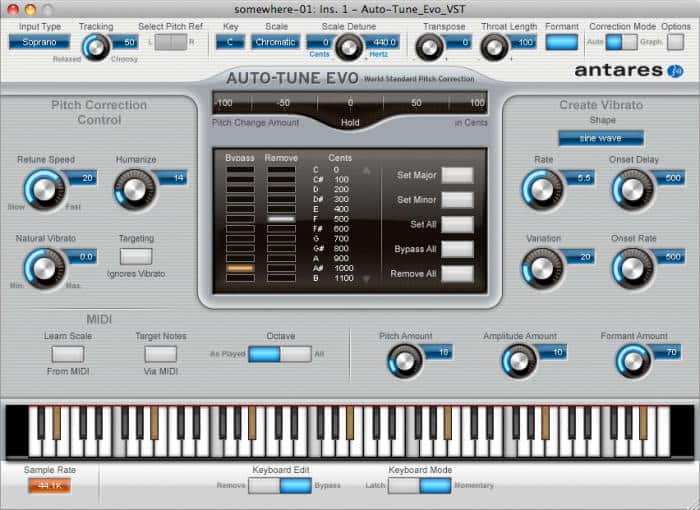
OS: Windows Win Mac Mac Bit Version: 32-bit, 64-bit Developer: Antares Size: 11 MB Rating: 69/100
Autotune Evo offers two main ways to fix or shape pitch in vocals and instruments. Its Automatic Mode quickly detects pitch and corrects notes to a chosen key or scale, making it useful for live shows or fast studio work. The Retune Speed control lets you adjust how natural or robotic the tuning sounds.
For more detailed edits, the Graphical Mode displays each note’s pitch on a timeline so you can draw or move notes for precise results. Tools like Formant control, Vibrato settings, and Transpose options let creators fine-tune tone, expression, and tuning style across any genre.
Features
- Real-Time Pitch Detection
- User-Selectable Key And Scale
- Adjustable Retune Speed Control
- Graphical Mode For Manual Editing
- Formant Correction Option
- Humanize Control For Natural Sound
- Natural Vibrato Adjustment
- Transpose And Detune Controls
- Low Latency Performance
- Suitable For Studio And Live Use
Pros
- Handles real time pitch correction
- Includes both Auto and Graph modes
- Formant control keeps voices realistic
- Humanize makes voices sound natural
- Shows pitch moves with graph view
- Keyboard view helps see notes
- Has many scale and key choices
- Transpose and detune add flexibility
- Low latency for studio use
- More detailed than most free tuners
Cons
- Interface looks old and outdated
- Uses more CPU than others
- Can crash in some DAWs
- Small delay not good live
- Limited vibrato control options
- Formant sounds weird when pushed
- No new updates or support
- Graph view can be buggy
- Harder to learn for beginners
- Easy to make vocals sound fake
Testimonials
Tips
- Always set the correct key and scale of the song for Autotune Evo to work properly.
- Use a fast Retune Speed for a robotic pop or hip-hop style, and a slower one for natural singing.
- I use the “Humanize” control to keep longer notes sounding real and not too robotic.
- I often switch to Graphical Mode when I want to fix single notes by hand.
- Combine Autotune with EQ and compression for a polished final vocal sound.
- Take time to learn both Auto Mode and Graphical Mode to get the best of each.
7. VstSpeek

OS: Windows Win Bit Version: 32-bit, 64-bit Developer: Wavosaur Size: 4 MB Rating: 67/100
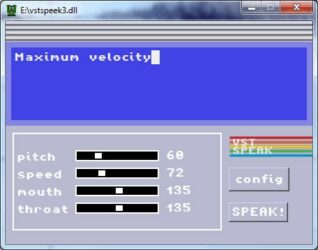
VstSpeek is a free vocal synthesis plugin that recreates the robotic, lo-fi speech sound of the Commodore 64. Enter text, choose a preset, and trigger speech with MIDI. Pitch, speed, mouth, and throat controls shape the voice.
The plugin supports MIDI velocity and pitch bend for live control. It runs on Windows in 32-bit and 64-bit VST formats, with a Mac OS X version available. It is designed for electronic music effects, not realistic speech synthesis.
Features
- Free Robotic Speech Synthesis Plugin
- Old School Text To Speech
- Text Entry For Spoken Words
- Preset Selection For Quick Setup
- Velocity Sensitive MIDI Speech Triggering
- MIDI Pitch Bend Support
- Adjustable Speaking Pitch Control
- Adjustable Mouth And Throat Controls
- Adjustable Speech Speed Control
- Crunchy Robotic Voice Creation
Pros
- Free vocal synthesis tool
- Unique robotic speech sound
- Works with typed words
- MIDI velocity controls speech
- MIDI pitch bend support
- Change pitch while speaking
- Adjust mouth tone live
- Adjust throat tone live
- Controls speaking speed easily
- Creates crunchy lo-fi voices
Cons
- Does not correct vocal pitch
- Only creates robotic speech sounds
- No automatic key or scale
- No formant control for voices
- Cannot follow MIDI target notes
- Speech output can sound harsh
- Old lo-fi sound limits uses
Testimonials
Tips
- I change one control at a time so I can learn what each setting does. I write down settings that create a sound I like.
- Try autotune with the correct song key and scale. The right key helps the plugin pull notes toward the notes used in the music.
- Set a slower autotune speed for a smooth sound. Use a faster speed for a strong, sharp effect often heard in modern pop and rap.
- Record a clean vocal before adding autotune. Good mic distance, low noise, and steady singing help the plugin work better.
- Keep the voice loud enough to hear, but avoid clipping. Lower the input level if the meter reaches the red area.
- Compare the sound with and without each effect. A/B testing helps show whether the plugin improves the track or only makes it louder.
- I use a little EQ after VST Speek to remove harsh high sounds. I also lower muddy low sounds if the voice covers the bass or kick drum.
8. GVST GSnap

OS: Windows Win Mac Mac Linux Linux Bit Version: 64-bit Developer: GVST Size: 403.2 kb Rating: 65/100
GVST GSnap offers pitch correction for vocals and instruments, letting you adjust tuning from natural fixes to strong robotic effects. It works on single melodic lines and includes controls for detection speed, correction strength, and scale selection for clear and flexible results.
With MIDI input, GSnap can match recordings to new melodies or create layered harmonies. A visual pitch display helps track tuning changes, while controls for attack, release, and vibrato add expressive shaping. It’s a simple, free tool for polishing or reshaping vocal performance.
Features
- Free Pitch Correction Plugin
- Fixed And MIDI Correction Modes
- Visual Pitch Display Window
- Scale And Root Note Selection
- Variable Pitch Correction Strength
- Attack And Release Time Control
- Adjustable Vibrato Depth And Speed
- Customizable Reference Tuning Frequency
- Provides Robotic Vocal Effect Option
- Supports VST And AU Formats
Pros
- Free for personal and commercial use
- Works on Windows, Mac, and Linux
- Includes visual pitch correction display
- Offers both Fixed and MIDI modes
- MIDI mode allows custom melodies
- Capable of strong robotic vocal effects
- Light on CPU compared to other tools
- Transparent sound with careful tuning
- Closest free option to Auto-Tune
- Easy scale and key selection
Cons
- Interface looks old and basic
- No built-in formant control
- Can sound robotic easily
- Latency issues during live use
- Only works on monophonic sounds
- Lacks visual pitch correction display
- Can crash in some DAWs
- Outdated compared to newer plugins
- Not compatible with AAX format
- Can distort sibilant vocal parts
Testimonials
Tips
- I always set the right key and scale for my song, so GSnap knows which notes to fix.
- I adjust the “Attack” and “Release” times to make the correction sound more natural or robotic.
- I check the “Speed” control because faster speeds make a T-Pain-like effect, while slower ones sound smoother.
- I sometimes mix a little of the dry signal with the corrected one to keep a realistic tone.
- Remember that pitch correction works best with clean, noise-free vocals.
- Experiment with subtle pitch shifts to create harmony layers or creative effects.
9. DSP-2

OS: Windows Win Bit Version: 32-bit Developer: MaxSynths Size: 9.7 MB Rating: 61/100
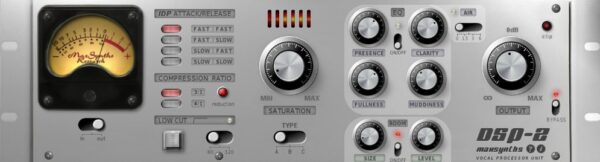
DSP-2 is a vocal insert effect that combines an intelligent dynamic processor, selectable compression, three saturation modes, and a four-band EQ tuned to vocal frequencies. It also includes controls for presence, clarity, low-mid mud, and high-end air.
A Schroeder-based room emulator adds adjustable ambience, while input/output VU metering helps track levels. Attack, release, output, mix, and bypass controls support quick checks. DSP-2 runs on Windows as a 32-bit VST plugin.
Features
- Four Automatic Compression Modes
- Selectable Compression Ratios
- Three Saturation Operating Modes
- Vocal Focused Four Band Equalizer
- Schroeder Based Room Emulator
- High Precision Input Output Meter
- Adjustable Compressor Attack And Release
- Low Cut Bass Filter
- Presence And Clarity Controls
- High End Air Switch
Pros
- Complete vocal processing in one plugin
- Four automatic compression modes
- Selectable compression ratios
- Gentle, natural vocal compression
- Includes three saturation types
- Vocal-focused equalizer frequencies
- Includes useful low-cut filtering
- Built-in room sound effects
- Adjustable room size and mix
- Clear input and output metering
Cons
- No pitch correction at all
- No pitch-shifting controls
- No formant-shifting controls
- No key or scale settings
- Only supports old 32-bit VST
- Windows users only
- No VST3 support
Testimonials
Tips
- I start with a clean vocal recording before adding DSP-2. A clear recording helps the compressor, EQ, and saturation work better.
- I use the input meter to avoid sending too much level into DSP-2. Lower the track volume if the meter stays too high.
- I compare the EQ sound with the EQ turned off. This helps me make sure the vocal is truly better, not just louder.
- I place an Auto-Tune VST before DSP-2 when I want DSP-2 to process the corrected vocal. This can make the vocal more steady and clear.
- I set the Auto-Tune key and scale to match the song. If these settings are wrong, the voice may move to the wrong notes.
- Set Auto-Tune to the song key, then choose a slower retune speed for a natural sound. Faster retune speeds create a stronger, more noticeable effect.
- Match the output level to the bypassed signal before judging the sound. A louder setting can seem better even when it is not.
10. KeroVee
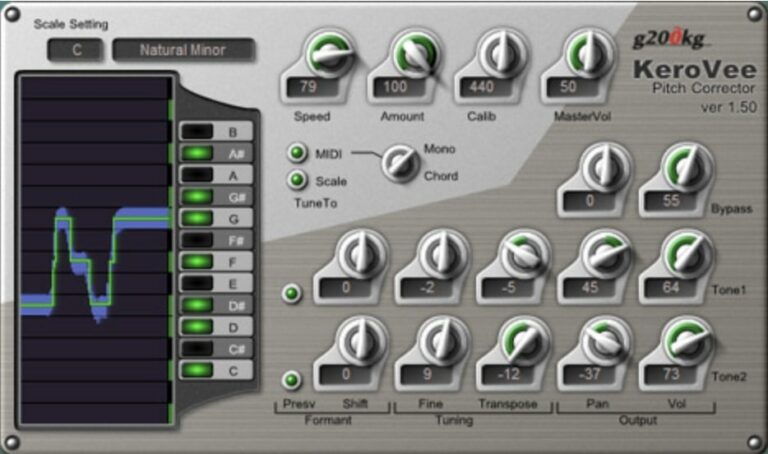
OS: Windows Win Bit Version: 32-bit Developer: g200kg Size: 0.9 MB Rating: 59/100
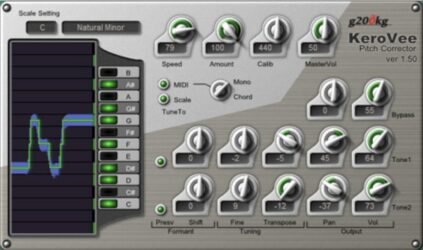
KeroVee is a pitch correction plugin for Windows that gives vocals an autotune-style effect. It can adjust pitch in real time, mix corrected and raw sounds, and even shift entire notes up or down. Its controls allow precise tuning for both natural and robotic tones.
KeroVee offers tools like scale selection, pitch graphs, and note filters to match your song’s key. With extra settings for tone, formant, and pan, you can shape how the voice sits in your mix. It’s a simple way to fix pitch or create unique vocal effects.
Features
- Real-Time Pitch Correction
- Formant Preservation Option
- Adjustable Correction Speed
- Scale And Key Selection
- Pitch Graph Visualization
- Follow MIDI, Scale, Or Chords
- Pitch Shift And Transpose
- Tuning Frequency Calibration
- Lightweight CPU Usage
- Works For Vocals And Instruments
Pros
- Free to download and use
- Formant keep feature sounds natural
- MIDI input adds more control
- Can mix corrected and raw sound
- Shows pitch visually on graph
- Responsive and fast pitch changes
- Lets you shift notes easily
- Light on computer memory
- Adjustable tone and brightness
- Good for live voice tuning
Cons
- Only works on Windows systems
- No 64-bit plugin version
- No macOS or Linux support
- Outdated, old-looking interface
- Can crash in some DAWs
- Can sound robotic or harsh
- Limited real-time processing options
- Lacks preset management system
- Few updates or new versions
- Weaker features than Graillon Free
Testimonials
Tips
- Start by setting the correct input key for the song before turning on pitch correction.
- Use small “TuneSpeed” adjustments to blend the corrected voice smoothly into the mix.
- Try the “Formant Shift” setting for fun voice changes, like making a voice sound older or younger.
- Record clean and quiet vocals to get the best result from any voice changer VST.
- Combine KeroVee with EQ and compression to keep the voice bright and balanced.
- Save custom presets in KeroVee for quick access during mixing and live sessions.
11. EasyVox

OS: Windows Win Bit Version: 32-bit Developer: Terry West Size: 1.2 MB Rating: 59/100
EasyVox is a Windows VST plugin that combines vocal compression, limiting, noise gating, and enhancement in one mono vocal strip. It also includes autogain, pre-limiting, input and output gain, and level meters.
Its three-band equalizer offers male, female, and off models, plus fine adjustment and low, mid, and high filtering. A vocal doubler adds width, while reduction and output meters show processing activity.
Features
- Dynamic Vocal Compression And Limiting
- Three-Band Vocal Equalizer
- Automatic Gain Control
- Pre-Limiter Signal Control
- Automatic Noise Gate
- Vocal Doubler Effect
- Three Equalizer Models
- Low, Mid, And High Cuts
- Adjustable Compression Ratio
- Input, Output, And Reduction Meters
Pros
- Simple vocal strip workflow
- Built-in vocal limiting protection
- Three EQ models speed setup
- Fine EQ allows small changes
- Auto gate reduces unwanted noise
- Pre-limiter controls loud peaks
- Vocal doubler adds width
- Reduction meter shows compression work
- Fast all-in-one vocal processing
- Clear meters show signal levels
Cons
- No pitch correction or autotune
- Only supports Windows computers
- Uses outdated 32-bit technology
- No VST3, AU, or AAX
- May fail in modern DAWs
- No key or scale settings
- No note-by-note correction
Testimonials
Tips
- I place my pitch-correction plugin before EasyVox. This lets EasyVox smooth and shape the vocal after the notes are corrected.
- I set the song key and scale in my Auto-Tune plugin first. The right key helps the plugin choose better notes.
- I start with a slower retune speed for a natural sound. I use a faster speed only when I want a strong robotic effect.
- I watch the input meter before turning up the effects. I keep the signal strong but avoid letting it clip.
- I make small EQ changes instead of turning every knob all the way up. Small moves usually keep the voice clear and smooth.
- I compare the processed sound with the bypassed sound often. I also match the volume so the louder sound does not trick my ears.
- Listen to the vocal in the full mix, not only by itself. A setting that sounds plain alone may fit the music better.
12. VocEQPro

OS: Windows Win Bit Version: 32-bit Developer: Terry West Size: 1.9 MB Rating: 57/100
VocEQPro is a four-band mono vocal equalizer for Windows 32-bit VST hosts. Enter lyrics and play notes from a MIDI keyboard, then shape low, mid, and high frequencies across a range from 65 Hz to 15 kHz.
Male, female, and default presets help adjust vocal tone, while Pre, Mid, and Air modes add extra color. VocEQPro-C also includes a compressor, automatic limiter, limit light, and VU meters for level control.
Features
- Four-Band Mono Vocal Equalizer
- Wide Frequency Range Control
- Eight Patch Presets
- Male And Female Presets
- Pre, Mid, And Air Boosts
- Gender Attenuation Controls
- Automatic Output Limiter
- Adjustable Compressor Controls
- Input And Output VU Meters
- Designed For Mono Vocal Tracks
Pros
- Built for musical EQ choices
- Eight patches speed up workflow
- Pre boost adds body early
- Mid boost adds vocal focus
- Air boost adds vocal sparkle
- Gender controls shape vocal balance
- Automatic limiting helps control peaks
- Built-in compression adds smoothness
- MIDI keyboard supports lyric-based control
Cons
- Not actually an autotune plugin
- No key or scale settings
- No retune speed control
- Only works with mono tracks
- Windows users only
- Uses outdated 32-bit technology
- No VST3, AU, or AAX
Testimonials
Tips
- I place VocEQPro on a mono vocal track so it can shape the voice correctly. The plugin is made for mono vocal signals.
- I start with a male, female, or default preset, then adjust it to fit the singer. Presets are only a starting point, not a final mix.
- I check the VU meter while I make changes. This helps me avoid pushing the vocal too hard.
- I compare the processed sound with the bypassed sound. If the vocal is only louder, I lower the output before judging the tone.
- I set Auto-Tune’s key and scale before changing its speed. The correct key helps the plugin choose the right notes.
- I use a faster Auto-Tune speed for a clear effect and a slower speed for a more natural sound. I listen to the whole song, not just one word.
- Always check the vocal with the music playing. A sound that seems bright alone may fit well once the instruments are added.
13. Autotalent

OS: Windows Win Mac Mac Bit Version: 32-bit, 64-bit Developer: Oli Larkin Size: 1 MB Rating: 55/100
Autotalent is a real-time pitch correction and auto-tune plug-in for mono tracks. It limits notes to a chosen scale and can create tuned vocals, pitch-shifted parts, or pronounced vocal effects. Controls include correction strength, mix, glide, tuning, and semitone shift.
Note sliders set correction for each chromatic note, while formant shifting changes vocal tone. Autotalent is available as a VST or AU plug-in for Windows and Mac in 32-bit and 64-bit versions. On stereo tracks, the left channel is copied to the right.
Features
- Real-Time Pitch Correction
- Auto-Tune Vocal Effects
- Pitch Shifting By Semitones
- Formant Shifting Controls
- Tune And Glide Controls
- Adjustable Pitch Correction Strength
- Note-Specific Correction Sliders
- Original And Tuned Mix
- VST And AU Formats
- 32-Bit And 64-Bit Versions
Pros
- Includes useful formant shifting
- Shifts pitch by semitones
- Tunes in tiny cent steps
- Controls correction strength easily
- Glide makes note changes smoother
- Mixes tuned and original sound
- Lets you choose every note
- Creates strong robotic vocal effects
- Offers many automation choices
- Can fix notes without MIDI
Cons
- Limited to mono tracks
- Stereo input copies the left channel
- Manual note setup takes longer
- No built-in scale selector
- No pitch graph or tuner display
- Reported latency during live use
- No VST3 plugin format
Testimonials
Tips
- I choose the right song key by setting the notes to “in” or “snap.” This helps the plugin know which notes to use.
- I start with low correction strength. Then I slowly raise it until the vocal sounds clean but still natural.
- I raise the correction smoothness when I want softer changes between notes. Lower settings can make the effect more sharp.
- Record the source as cleanly as possible before using Auto-Tune. Low noise, steady volume, and a good microphone make the result better.
- Keep the input level out of the red. Clipping before pitch correction can create harsh sounds and tracking mistakes.
- Compare the tuned sound with the bypassed sound often. This helps me make sure the vocal is better, not just different.
- Save a copy of the dry vocal before processing it. This makes it easy to try new settings without losing the original performance.
14. Side Brain's Autotuna

OS: Windows Win Mac Mac Bit Version: 64-bit Developer: Side Brain Size: 848 KB Rating: 55/100
Side Brain’s Autotuna is a vocal pitch correction plugin for Windows and Mac. It lets you choose a song key, scale, and 12 note patterns, then adjust correction strength, thresholds, quality, and the mix of dry and corrected sound.
The plugin can follow scale choices from Push or Live and supports Ableton Live 12 Scale Awareness. It includes note-by-note switches, pitch changes in cents, output gain, and saved pattern import. Max for Live and Ableton Live Suite 10 or newer are required.
Features
- Corrects Vocal Pitch Automatically
- Selects Key And Scale Type
- Follows Push And Live Scales
- Offers Twelve Note Patterns
- Imports Saved Note Patterns
- Adjusts Correction Amount
- Controls Sibilance And Ambience
- Switches Individual Scale Notes
- Shows Pitch Changes In Cents
- Mixes Dry And Wet Signals
Pros
- Follows Live scale choices
- Follows Push scale choices
- Supports many musical scales
- Turns notes on or off
- Shows pitch changes in cents
- Offers twelve note patterns
- Imports saved note patterns
- Sets when correction begins
- Controls sibilance during tuning
- Supports Ableton Live 12 awareness
Cons
- Requires Ableton Suite 10 or newer
- Needs Max for Live access
- Not a standalone VST
- 64-bit only limits older hosts
- Bare-bones compared with MAutoPitch
- Latency may hurt live singing
- Can fail to load in Live
Testimonials
Tips
- I check the song key before I use Autotuna. I choose the matching scale so the vocal notes move to the right places.
- I start with a light correction setting. This keeps the voice sounding more natural.
- I use a fast correction speed when I want a strong, bright tuning effect. I use a slower speed for a softer sound.
- I sing or play a clean signal into the plugin. Too much noise can make pitch correction less accurate.
- I place Autotuna on the vocal track before adding heavy effects. This helps it hear the original pitch more clearly.
- I listen to the vocal in the full mix, not only by itself. A setting that sounds strange alone may work well with the music.
- I compare the tuned sound with the bypassed sound. This helps me avoid using more correction than the song needs.
15. Son of a Pitch

OS: Windows Win Bit Version: 32-bit Developer: Saltline Size: 5.8 MB Rating: 54/100
Son of a Pitch is a Windows 32-bit VST effect for shifting incoming audio by up to three octaves higher or lower. Use the main pitch control for manual changes, or shape movement with a host-synced LFO and selectable waveforms.
Its filter section adds two state-variable filters and a Butterworth filter, with cutoff and resonance controls. Filter and pitch LFOs offer adjustable rate, depth, amount, waveform, and tempo sync. Bypass the filters for direct pitch processing.
Features
- Audio Pitch-Bend Effect
- Manual Pitch Control
- Pitch Range Up To Three Octaves
- Host-Synchronized Pitch LFO
- Multiple Pitch LFO Waveforms
- Three Filter Types
- Two State-Variable Filters
- Butterworth Filter Option
- Adjustable Filter Cutoff
- Adjustable Filter Resonance
Pros
- Wide plus-minus three-octave range
- Manual pitch control feels direct
- Host-synced pitch LFO movement
- Host-synced filter LFO movement
- Supports real-time pitch bending
- Adds two filter sections
- Includes smooth Butterworth filtering
- Offers three filter choices
- Dry signal can pass through
- Multiple LFO waveforms available
Cons
- Windows-only compatibility
- 32-bit format limits modern hosts
- No VST3, AU, or AAX
- Not true automatic pitch correction
- No key or scale selection
- No retune speed control
- Crackles reported by users
Testimonials
Tips
- I use small pitch moves first, such as a few notes up or down. This keeps the sound more natural.
- I automate the pitch knob to make fast dives and rises. Slow moves work well for smooth effects.
- I use the host-synced LFO when I want the pitch to move with the beat. Try slow settings for gentle motion.
- I test the plugin on vocals, guitars, synths, and drum loops. Each sound can create a different effect.
- I map the pitch control to a MIDI knob or wheel. This lets me play pitch bends in real time.
- I place a tuner before the plugin when I need to check the source pitch. Son of a Pitch bends the whole sound instead of fixing each note.
- The plugin is a pitch-bend effect, not a full Auto-Tune tool. Use a pitch-correction plugin when notes need to be tuned one by one.

- Unlimited Beats & Pages
- Sell Digital & Physical Products
- Full WordPress Music Website
- 90 Free Graphics - Get $15 Off
Best Autotune Plugins Compared
This table compares Autotune plugins by features, controls, effects, formats, and more.
| Details | Graillon 2 | Multiply 2 | Old Skool Verb | Melda MAutoPitch | Vocal King | Autotune Evo | VstSpeek | GVST GSnap | DSP-2 | KeroVee |
|---|---|---|---|---|---|---|---|---|---|---|
| Image |  |
 |
 |
 |
 |
 |
 |
 |
 |
 |
| Rating | ||||||||||
| OS | Windows, Mac, Linux | Windows, Mac | Windows, Mac | Windows, Mac | Windows, Mac | Windows, Mac | Windows | Windows, Mac, Linux | Windows | Windows |
| Formats | VST, AU, AAX, LV2 | VST3, AU, AAX | VST, VST3, AAX | VST, AU | VST, AU | VST, AU, RTAS | VST | VST, AU | VST | VST |
| Bit Version | 64-bit | 64-bit | 32-bit, 64-bit | 64-bit | 32-bit, 64-bit | 32-bit, 64-bit | 32-bit, 64-bit | 64-bit | 32-bit | 32-bit |
| Developer | Auburn Sounds | ACON DIGITAL | Voxengo | MeldaProduction | J-Hud-Studio | Antares | Wavosaur | GVST | MaxSynths | g200kg |
| License | Freeware | Freeware | Freeware | Freeware | Freeware | Commercial | Freeware | Freeware | Freeware | Freeware |
| Sample-Based | No | No | No | No | Select | No | No | No | No | No |
| Download Size | 57 MB | 10 MB | 21 MB | 200 MB | 11 MB | 11 MB | 4 MB | 403.2 kb | 9.7 MB | 0.9 MB |
| CPU Load | Low | High | Low | Low | Low | Low | Low | Low | Low | Low |
| Polyphony | 1 | 6 | N/A | 1 | 64 | 1 | 1 | 1 | N/A | 1 |
| Features | Pitch Shifting, Formant Control, Pitch Correction, Built-in Effects, Pitch-Tracking Modulation, Keyboard Tuning, Vocal Doubler | Phase-Randomized Chorus, Six Extra Voices, Frequency Modulation, Amplitude Modulation, Five-Band Equalizer, Stereo Spread, Modulated Pre-Delay | Plate, Room, Hall Reverb, Five Reverb Modes, Mode Editor, Stereo Processing, Preset Manager, A/B Comparisons, Zero Latency | Automatic tuning, Pitch correction, Formant shift, Stereo expansion, Scale selection, Key selection, Real-time pitch display | Presence Control, Smooth Compression, Low-Cut Filter, Brightness Enhancer, Tonal Modes, Output Level, Visual Meters | Automatic Mode, Graphical Mode, Retune Speed, Humanize, Natural Vibrato, Formant Correction, Pitch Correction Graph | Robotic Speech Synthesis, Text-to-Speech, MIDI Triggering, Pitch Bend, Pitch Control, Mouth Control, Throat Control | Pitch correction, Robotic effect, MIDI control, Scale selection, Visual feedback, Vibrato control, Calibration | Intelligent Compression, Saturation, Vocal EQ, Room Emulation, Volume Enhancement, VU Meter, Low Cut Filter | Pitch correction, Real-time tuning, Dual output mix, Scale selection, Formant preservation, MIDI control, Robotic effect |
| Controls | Pitch-Tracking Mod, Wave Control, Octave Control, Dry/Wet Mix, Pitch Shift, Formant Control, Output Meter | Frequency Modulation, Amplitude Modulation, Voice Count, Equalizer, Stereo Spread, Pre-Delay, Big Chorus | Presets, Mode, Edit, Reverb Params, Pre-Delay, Space, Time | Depth, Speed, Detune, Base, Dry/Wet, Keep Formants, Width | Pres Comp, Low Cut, Tighten, Bass, Crispy, Final Comp, dB Output | Retune Speed, Humanize, Natural Vibrato, Input Type, Key And Scale, Formant, Pitch Correction Graph | Text Box, Pitch Control, Speed Control, Mouth Control, Throat Control, Configuration Button, Speak Button | Min Freq, Max Freq, Gate, Speed, Threshold, Amount, Calibrate | VU Meter, Meter In/Out Switch, Attack/Release Buttons, Compression Ratio Buttons, Low Cut Switch, Saturation Knob, Saturation Type Switch | Scale Setting, Pitch Graph, Note Buttons, Speed, Amount, Calib, MasterVol |
| Effects Included | Compressor, Gate, Chorus, Preamp, Bitcrusher, Doubler, Pitch-Tracking Modulation | Chorus, equalizer, amplitude modulation, frequency modulation, pre-delay | Room reverb, Plate reverb, Voice streaming reverb, Hall reverb | Pitch correction, formant shift, stereo expansion, detune | Compression, Low Cut Filter, Tone Shaping (Tighten, Bass), High-End Enhancement (Crispy), Saturation (Clean/Dirty Switch), Limiting | Pitch correction, vibrato, formant correction, transpose, detune | None | Pitch correction, vibrato | Compressor, saturator, equalizer, reverb | Pitch correction, transposition, formant preservation, panning, tone adjustment, volume control |
| MIDI Learn | No | No | No | Yes | Unknown | Yes | No | No | No | No |
| Presets | 23 | 80 | 18 | 4 | N/A | N/A | N/A | N/A | N/A | N/A |
| Standalone | No | No | No | No | Yes | No | Yes | No | No | No |
| Last Updated | 01/16/2023 | 11/02/2026 | 04/03/2026 | 04/29/2024 | 06/08/2020 | 01/28/2011 | 05/04/2014 | 06/25/2023 | 11/02/2026 | 02/11/2012 |
Our Favorite Autotune VST Plugin
Our top pick for the best free Autotune VST plugin is Graillon 2 by Auburn Sounds. The plugin offers helpful pitch correction tools, built-in effects, powerful controls, and it is available for Windows and Mac.
| Details | Graillon 2 |
|---|---|
| Image |
|
| Rating | |
| OS | Windows, Mac, Linux |
| Formats | VST, AU, AAX, LV2 |
| Bit Version | 64-bit |
| Developer | Auburn Sounds |
| License | Freeware |
| Sample-Based | No |
| Download Size | 57 MB |
| CPU Load | Low |
| Polyphony | 1 |
| Features | Pitch Shifting, Formant Control, Pitch Correction, Built-in Effects, Pitch-Tracking Modulation, Keyboard Tuning, Vocal Doubler |
| Controls | Pitch-Tracking Mod, Wave Control, Octave Control, Dry/Wet Mix, Pitch Shift, Formant Control, Output Meter |
| Effects Included | Compressor, Gate, Chorus, Preamp, Bitcrusher, Doubler, Pitch-Tracking Modulation |
| Download | Download Graillon 2 |
Autotune VST FAQs
How to Install Autotune VST Plugins
To install autotune VST plugins on Windows or Mac, extract the files from the Zip or Rar. Move the files (.dll for Windows or .component for Mac) into your DAW’s plugin folder. Then restart your software and rescan the directory to complete the process. Tutorial: How to Install VST Plugins
Windows:
Extract the downloaded zip file and copy the .dll file into the VST plugins folder scanned by your DAW. Restart your music software and rescan your plugin directory to begin using the new VST.
Mac OS X:
Extract the downloaded archive and move the .component or .VST file to the plugin folder. It is usually /Library/Audio/Plug-Ins/Components or /Library/Audio/Plug-Ins/VST. Restart your DAW and rescan your plugins to complete the installation.
What Is Autotune?
Autotune is software that helps singers fix their pitch. It works in the studio and during live performances. Autotune is a plugin for DAWs. It can also work as a stand-alone unit for live performances and studio processing.
Autotune helps to shift pitches to the nearest correct semitone. You can also use it to alter the human voice by lowering or raising the pitch. Autotune is now a common tool in studios. It corrects small mistakes and maintains the energy of the original performance.
Why Is Autotune Popular?
Autotune has had a negative reputation in the past, but it is very popular today with singers and rappers. Autotune has opened up new possibilities in hip-hop, pop, and R&B music.
In 1998, singer Cher popularized a technique using auto-tune to distort vocals. This created the ‘Cher effect.’ Over time, the effect spread slowly in the music industry, especially in R&B and dance music.
Auto-tune has gained popularity over time, thanks to artists like Kanye West, Lady Gaga, Madonna, and Maroon 5 using it in their performances. Auto-tune plugins are now easy for all musicians to access. They have become essential tools for singers. Related: What Is Autotune?
What Is The Best Free VST Autotune?
There are many free plugins that you can use to make your music sound professional and high-quality. Some of the best free Auto-tune VST Plugins include Graillon 2, Vstspeek, MautoPitch Autotune, Gsnap, and Autotalent.
How Do I Autotune My Voice For Free?
Auto-tune lets singers achieve perfection by enhancing the feel of a track and removing any minor pitch imperfections. Many singers use auto-tune as a normal part of the production process. Some also use it as an added effect to make their voice sound robotic, creating an edge in their music.
All you need is to download one of the plugins above and install it in your favorite DAW software. The process is pretty simple: record vocals and use the plugin to add the auto-tune effect to your track.
What Are Examples of Autotune?
Here is a video of 10 music artists who heavily use auto-tune. The list includes Cher, Will.I.Am, Bon Iver, Kanye West, Travis Scott, Kesha, Future, Daft Punk, Lil Wayne, and T-Pain.
How to Use Autotune
The best paid autotune plugins are Antares Auto-Tune Pro, Celemony Melodyne, and Waves Tune Real-Time Plugin. These plugins offer more features, formant shift options, and controls to fine-tune your audio for a professional sound.
The plugins mentioned above are great free autotune options. They provide pitch correction, vocal effects, and good sound quality. So, if you’re on a budget, these are excellent choices.
In conclusion, these free autotune plugins are great options compared to paid ones. Paid plugins include: Super Vocoder, Antares Auto-Tune (Unlimited or Access), Waves Tune Real-Time, Synchro Arts RePitch, and iZotope plugins.
Many plugins provide creative tools for vocal recording. They offer features like real-time pitch correction and formant shifting. These tools help music producers and musicians achieve their desired effects.
I hope you enjoy this list of free autotune VST plugins.